>

Friday, June 29, 2012

Unhappy Meal


In 1979, to prove you were cool in school, you had to be able to recite the McSlogan: Twoallbeefpattiesspecialsaucelettucecheesepicklesonionsonasesameseedbun. It was pretty genius as slogans go, forcing the ingredients list into one’s memory in a super mnemonic jingle that required a deep breath and much practice to say. I have a hunch that a lot of folks over 40 can still recite it at a moment’s notice today.


Fast food nostalgia, like most rosy-spectacled memories, usually brings back fun times, packaged in a great deal of horror. It wasn’t the fact that the fries were fried in pure beef tallow or that the cattle slaughtered en mass to produce patties were being farmed on razed rainforest land — it was the packaging itself that speaks most vividly to an earlier age.


What happened to all those polystyrene clamshell boxes our burgers came in? They’re still with us. Mostly buried in anaerobic landfills where their decay isn’t scheduled to begin for 500 years (if it ever does), or floating on the world’s oceans because it is light enough to be shifted by the wind and won’t sink.

The things that make fast food fast as also the things that make our life short. From the styrenes in the packaging to the trans-fats that replaced the beef tallow, to the antibiotics and hormones in the patties, to the genetically modified fries (Mickey D’s was the largest consumer of Monsanto’s NewLeaf, the potato classified by the FDA as a pesticide rather than a food) — the convenience of a drive-thru meal only delays its real cost.

The humor behind the slogan is that you can’t even pause to break between words: the emphasis is on speed. Eating the same way — wolfing your meal down — is not how humans best eat.

Contemplate. Masticate. Enunciate. 

Thursday, June 28, 2012

Fried Bread


Astonishingly, this healthy breakfast contains very little cholesterol or carbs.

It does, however, have high sodium and making sure the oil is hot so as to avoid grease-soaked bread, you do risk burning your house down.

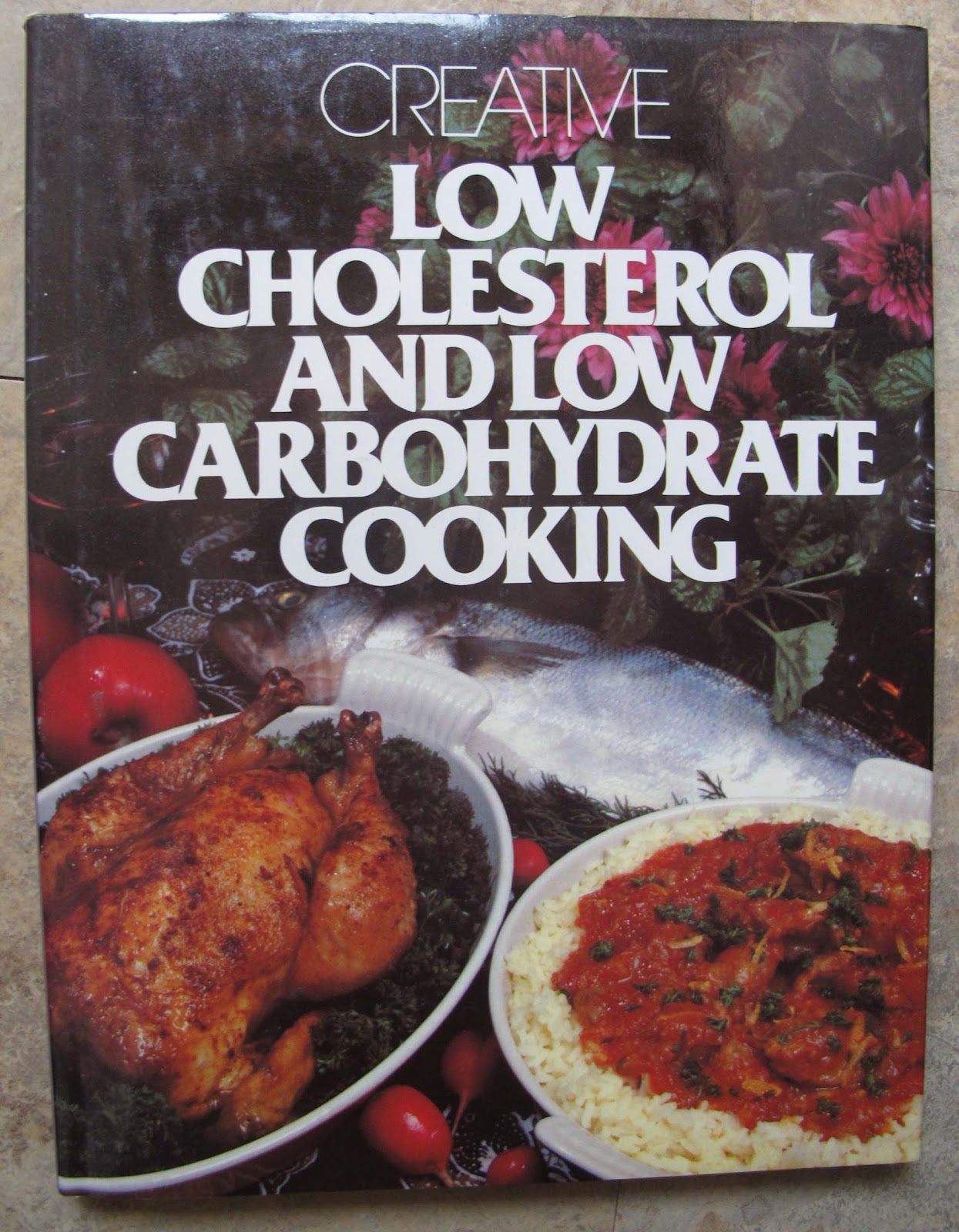
Creative Low Cholesterol and Low Carbohydrate Cooking, Ottenheimer Publishers, Inc., 1980

Also from this book: You've Been Served! 

Wednesday, June 27, 2012

Product 19


Kelloggs’s iconic cereal Product 19, touted as a nutritious cereal-style supplement (its main purpose seems to be a vehicle to provide vitamins and minerals rather than flavor), is memorable for not much more than its name. It has a somewhat sinister, scientific, government-y prototype feel to it implied by the word “product.” Why would a company as colorful as Kelloggs, not known for their restraint in naming breakfast cereals, go for such a bizarrely bland name? Perhaps its popularity is an expression of reverse psychology: if it sounds this bad, it has to be good.


In fact, it is the result of a dearth of imagination on the part of the copywriter responsible for making this dull cereal sound exciting. His charge was to find something to compete with General Mills’s cereal Total. Finally, he went with the simplest solution: as the 19th product Kelloggs was developing that year, he let it go at that.

Still, Kelloggs found a way to make it interesting by suggesting that eating Product 19 could make people who were considerably older feel like they were 19 again. It probably made younger people feel old eating it too.

In 1988, Fort Scott summer camp, like many others, served a selection of single-portion cereals for breakfast. You could take your pick from giant boxes filled with the plastic cups with peel-off lids, grab a small carton of milk and you were set. This worked handsomely at the beginning of the summer. Campers and counselors alike had their pick of a wide variety of cereals from Froot Loops and Apple Jacks and Frosted Flakes, Rice Krispies, and Corn Flakes — but in the waning weeks of July, not so much. All that was left were huge, unplumbed boxes of Product 19, sitting there against the wall like dates at the Junior-Midget dance, just hoping and waiting to be picked.

Tuesday, June 26, 2012

Feeding The Ever-Burning Flame


This excerpt appears in the introduction to Candies and Bonbons and How To Make Them, an otherwise excellent book about all aspects of confectionary by the esteemed Marion Harris Neil.

Um.

Candies and Bonbons and How To Make Them, Marion Harris Neil, 1913

Monday, June 25, 2012

The Elixir of Life


Life is pretty awesome, so it stands to reason that people have wanted to stick around to enjoy it. To that end, much effort has been dedicated in the course of human history towards finding or creating magical elixirs which could either extend life or provide immortality.

The ancient Chinese thought the answer lay in long-lasting precious stones and metals, and alchemists set out to discover which could be manipulated into a substance to transfer their properties to whomever ingested them. Sadly, their early efforts focused quite heavily upon mercury, which is such an odd element it was often thought an alchemical key, and delicious-looking besides. Being exceedingly toxic, it killed many Emperors for a surprisingly long time. You’d think word would get around: don’t drink the silvery drink, but apparently not.

Ming Dynasty Emperor Jiajing, who survived an assassination attempt by his concubines, all of whom were ordered executed by "the slow slicing method" (lingchi - do yourself a favor and DO NOT look this up) and their families also killed, only to die of mercury poisoning in his quest for the fabled Elixir of Life. 

It is no surprise that the promise of longer life has always been a major tool in the huckster’s repertoire; after all, the actual efficacy of the potion can’t be measured until long after its seller has left town.

In 1973, the Dannon company decided to use this tried and true approach to increase the public interest in yogurt, so embarked on what became a highly successful advertising campaign linking long life to their product. It was called “In Soviet Georgia,” and featured various robust, active peasants of reportedly great age (their names and ages were given as an indicator of veracity) who, it was claimed, owed their longevity to eating yogurt. This was quite a daring stance to take during the Cold War, but it helped that the people in the ads wore traditional garb and didn’t look like typical soviet politicians and babushkas.


Perhaps wary of being too closely linked with the charlatans of old also promising long life, the ads declared prominently that their yogurt might not actually cause you to live longer than you otherwise would (and thus saved them from claims of false advertising), but strongly suggested that it “couldn’t hurt.” Millions agreed, and adopted it into their diets.

Nowadays, yogurt is no longer promoted with claims of a longer life, but of a more digestively comfortable one. Either way, it’s sold less as a food than as a medicine.

Dannon recently settled a $21 million lawsuit over exaggerated claims about the health benefits of its Activia yogurt.


In Soviet Georgia ad, the Dannon Company, 1977 

Friday, June 22, 2012

Goldilocks and the Post Sugar Bear


— What’s on the agenda today?

— Post Sugar Crisp cereal.

— OK. So: it’s for kids. What do kids like?

— Stuffed toys. My daughter has so many she can’t get in her own bed.

— Aren’t Post pushing the honey content in this stuff?

— Yes. It’s mostly just sugar though. Technically they can’t call it Honey Crisp.

— Mark my words, one day they’ll change the names of all these things to “Golden” or “Honey” instead of “Sugar.”

— No they won’t. Kids like sugar better than honey. So let’s go with a bear. Bears like honey. If the bear keeps wanting to grab the kid’s cereal, it’ll make folks think it’s full of honey.

— Like Pooh Bear, cute.

— No — let’s make it a giant bear. A bear as big as the kid. Then it’s an even match. We can call him “Sugar Bear.”

— A girl and her teddy wrestling over the cereal — I like it.

— Reminds me of sugar daddy. All little girls want a sugar daddy.

— But if the bear belongs to the girl, she’ll gladly let him have it. She needs to be afraid of the bear so she won’t give it up.

— Sounds crazy sexual to me. Can we really go with that?

— It’s no different than Red Riding Hood. Or The Three Bears.

— Good point. Fairy tale characters cut to the chase. So let’s have a wicked witch too. In the TV commercials they can live in the forest and the witch can always be hiding her Sugar Crisp from the bear, who always gets it.

— Like when the little girl grows up?

— Yeah.

— She lives all alone in the forest and keeps getting her home invaded and her person assaulted and her property stolen by a scary intruder?

— Yeah.

— Jesus.

— We’ll give the bear a laid-back vibe. Non-threatening. The witch will never seem upset about it. She wants the bear to break in.

— So you’re talking about a rape fantasy, then?

— Right!

— Jesus.

— How about we just go with the girl in her pajamas, sitting on the counter with her teddy bear looking on as she grabs handfuls of the cereal from the box? We’ll make it look like she’s misbehaving.

— That’s better.

— Make her a blonde. Goldilocks. But cut her bangs real short so she looks modern.

— Done. Next?


Ad for Post Sugar Crisp, 1959

Thursday, June 21, 2012

Afternoon Delight


Where to begin?

Diet advertising has always gone for the jugular: willpower. This plays into the idea that obesity is caused by that most insidious of all mental failings: lack of control. If the assumption is that a fat person can’t help themselves when it comes to succumbing to foods they should avoid eating, then food companies try to make eating it seem like it’s part of your “diet.”

A problem at the heart of this is the duality of the word “diet.” It is used both to refer to one’s diet in general — the totality of what we consume on a regular basis — and a diet, meaning a specific reduction in what we consume in order to lose weight.

The word diet is from old French, diete, meaning “a pittance,” which is in turn from the Latin dieta, meaning both “parliamentary assembly” and “a day’s food allowance.” This can be traced back to the older term diaita, meaning “prescribed way of life,” in Greek. The duality of meanings stems from a common point: the word’s The Proto-Indo-European (PIE) root is ai — “to give, allot” which also gives us the Latin dies, “day.” The daily offices of the Church took this root, leading to the idea of assembly. The consumption of food — eating one’s daily bread — is thus inextricably linked to the daily activities of consumption and communing. The Diet of Worms is perhaps the most familiar remnant of the use of the word Diet in this sense.

1521: Martin Luther defends his 95 Theses before Emperor Charles V in Worms, Germany

Being able to say “my diet” allows the brain to cheat when it comes to making decisions about what to put in your mouth. Hence the stunning confusion of images and text you see on the cover of every women’s magazine stacked at the supermarket checkout, which are extensions of what you see in this ad for sugar. Pornographic images of high-calorie sweets such as seasonally decorated cakes are presented alongside headlines that promise you can “Lose weight by eating all you want!” or “Drop 50lbs by Thanksgiving!” These covers are pornographic because they are designed to appeal directly to the id and stimulate deep-seated libidinal appetites — in short, they inspire a physical response (salivation, hunger) that overrides your better judgment. It’s part of your “diet,” after all, so what’s the harm, right?


A band which started out with the name "Fat City" on a show presented by someone named Burt Sugarman on his show "Midnight Special," singing a song about having sex in the (gasp!) daytime. 

The wording of this sugar ad also strikes at the place where words excite us. This is a “diet dodge,” a loophole you can exploit to fulfill your desires. In 1970, when this ad appeared in women’s magazines, the word “dodge” had other, more political connotations, most often heard in the phrase “draft dodgers.”

The word “undereat” is also no accident. It is the dearest wish for those with no willpower to be able to undereat (as opposed to overeat). This ad suggest that the dodge will allow them to attain this ability — perversely by overeating (who needs an ice cream and lunch?)

The word “need” appeals to your sense of entitlement: we all have needs, and want them fulfilled. Acknowledging a consumer / dieter’s personal need (for satiation) is a selling point. The ad says you need sugar to achieve your goals.

Finally, let’s not overlook the obviously sexual nature of the imagery: that is not an innocent ice cream cone, is it? It’s what you hope to do unselfconsciously once you lose the flab and become attractive to men once again. At long last, you’ll have the energy to enjoy some Afternoon Delight.

Wednesday, June 20, 2012

Lard-Ass


There is no such thing as the Lard Information Council.


If someone calls you a “lard-ass,” take it as a compliment. Lard is one of the best things about pigs (after the bacon and hams and chops and cracklings, of course). Lard is the rendered thin white fat that surrounds various of the hog’s internal organs, and has been an indispensible part of old world cuisines since men first wrestled a boar to the ground, had them a fry-up and said “yum!”


Because we all know that the flavor in meat is carried in the fat (you knew that, right?), it is most often pig’s fat that is made into lard, because on the contrary, it carries little flavor. This makes it ideal as a shortening for pastry, and its high smoke point also makes it a good choice for frying. Hogs fed on their natural diet (foraged acorns and scraps) produce the most lovely tasting meat, whereas hogs fed on corn (as industrially raised ones are) have very little flavor.


While it is true that as an animal fat, lard has its fair share of saturated fat, it is worth pointing out that the same amount of butter (by weight) contains more unsaturated fats and less cholesterol. Hydrogenated vegetable oil, developed in the early 1900s made cooking with shortening possible for those whose dietary restrictions forbid pork products, and for a long time, this trend was followed in restaurants too. But recently, good old-fashioned lard is making a comeback. It’s delicacy and the ease with which we can digest it cannot be substituted for something made from soybeans.

But lard has gotten a bad rap. It’s become synonymous with wanton, endemic obesity — so much so that it has even spawned spoof posters proclaiming its health benefits, such as the one above.

The thing is — the fake poster is, well, true.

Here’s what Mrs. Beeton has to say about making your own:

Lard (to Make):

METHOD.— melt the inner fat of the pig by putting it in a stone jar, and placing this in a saucepan of boiling water, previously stripping off the skin. Let it simmer gently, and, as it melts, pour it carefully from the sediment. Put it into small jars or bladders for use, and keep it in a cool place. The flead or inside fat of the pig before it is melted makes exceedingly light crust, and is particularly wholesome. It may be preserved a length of time by salting it well, and occasionally changing the brine. When wanted for use, wash and wipe it, and it will answer for making paste as well as fresh lard.

 Here is a very nice modern version from chickensintheroad.com: Lard Recipe

Tuesday, June 19, 2012

Matinée Idols and Nymphos


Rudolph Valentino


Appropriately, the term Matinée Idol can be traced back through the Romance Languages.

Matinée is from the French meaning “afternoon performance,” from matin (morning), and old French matines. A matineé is a daytime performance of a show that also comes on at night; the term originally carried with it the sense that the actors appearing in the earlier show were less good than those one could see in the evening. A Matinée Idol, then, had a cheapness about it, sort of like being a tabloid star.

Matines comes from the latin matutinas, referring to morning prayers, or merely “of the morning” which was derived from the old Roman Dawn goddess Matuta. She eventually morphed into Aurora, or the Greek goddess Eos.

Eos, that naughty girl, had an affair with Ares, the god of War, for which she was cursed with unsatisfiable sexual desire by Aphrodite, who was jealous. Them bitches were old school.

Thus we have a celestial nymphomaniac, a woman with uncontrollable sexual desire. Perhaps, when unable to sate herself during the day when all the men were at work in the city, she passed her time lusting after Matinée Idols down the flicks, sucking on ginger candy. 


 Candies and Bonbons and How to Make Them, Marion Harris Neil, 1913

Friday, June 15, 2012

Wedding Tackle


This recipe gives new meaning to the phrase “fruit of your loins.”

Victoria and Albert
Clearly the Matrimony Balls hark after the tradition of celebrating a marriage with fruit cake, the fruit symbolizing the children to come from the union. Initially, there were two cakes; a Bride’s Cake which consisted of plain cake with white icing symbolizing purity and fertility, and the Groom’s Cake, a smaller rich fruit cake. Eventually the two combined, and the tradition of the newlyweds cutting it together stems from the need for strength, as the solid icing needed to hold the layers up was hard to break. This icing became known as “royal icing” after Queen Victoria used it at her wedding, where it reflected her grand white dress — an unusual decision which has been copied ever since.


Even older traditions include building a tower of buns over which the Bride and Groom would kiss. The French retain this in the Croquembouche, a tower of profiteroles stuck together with spun sugar, which often serves as the top layer of the wedding cake.

Croquembouche 

Croque en bouche means “crunch in the mouth.” This is very likely what happens when one eats a Matrimony Ball.

Candies and Bonbons and How to Make Them, Marion Harris Neil, 1913

Also from this book: Matinée Idols and NymphosFeeding the Ever-Burning FlamePink Nut KissesJack-in-the-box
Pin It