>

Thursday, November 10, 2011

Parsley Merkin


Do not scoff at the idea of a pubic wig, the venerable merkin.

While used rarely today due to the ascendency of the bikini wax, they once provided an invaluable service to humble women suffering from the scourge of the middle ages, pubic lice. The only way to avoid the beasties was to give them no place to hide. In order to protect her modesty, she resorted to a bit of crotch fluff, a bit like a sporran worn inside her skirt.

Crabs were the least of a prostitute’s problems, however. The average medieval john left her with more than coin in her purse, so she employed a merkin to hide a litany of pustules, open sores, genital warts, and every kind of venereal disease you can imagine lest she be forced to retire from the world’s oldest profession through lack of customers. Add to her misery, the treatment for syphilis — mercury — caused hair loss, which meant she couldn’t use her natural assets to cover up.

Merkins are offered today to actors who may find themselves excessively depilated for a role set during a hairier time, or to guard against revealing too much flesh and earning a higher MPAA rating.

Food stylists use parsley for pretty much the same reasons: to add allure with frothy vividly colored curls, or to disguise a bare plate or deflect from a problematic area which has been rendered unappetizing.

Any likeness between a medieval prostitute and the caption offered alongside this Ten-in-one Sandwich Loaf is purely accidental and should not be interpreted as an unfortunate instance of sexual innuendo. In order not to be offended, do not look up the word “spunky” in a dictionary of British slang. You have been warned. Have a nice day.

Cooking With Cheese, Better Homes and Gardens, 1966

Also from this book: Fondue? Fondon't

Wednesday, November 9, 2011

MoonPie


The Apollo astronauts went into space equipped with very few things one might deem necessary for a trip so far away, but they had very little room to work with.

One of the bits of kit they never left home without was a can of shark repellent.

You are correct in pointing out that there are no sharks on the moon. There is no water on the moon; it is an inhospitable place for sharks or indeed all marine life of any kind. The average shark wouldn’t find it very comfortable on the moon as there would be nowhere to swim, nothing to eat, and it would also be quite cold. The astronauts didn’t know what they would find on the moon, but they could be pretty certain not to run into any sharks. Little green aliens — maybe. However, it’s hard to buy a can of alien repellent as we do not yet know what repels aliens. A can of Reddi-Wip would probably do the trick. Barring that, a good blast of Aqua Net might work.

So why did NASA supply its astronauts with shark repellent?

Because back when Saturn V rockets launched spacecraft, the only way to return to Earth was to splashdown in an ocean, the fall from above only slowed by a parachute. Upon hitting the water, there was a very limited amount of time for the astronauts to pop the hatch and climb out before the capsule sank. Waiting for the rescue vessel to reach them was in many ways the most perilous part of the entire journey due to the possibility of being eaten by sharks. This would have been an enormous waste of an astronaut, which require many years of training to send to the Moon, not to mention the expense of their nifty spacesuits.

This astounding tableau celebrates Man’s achievements in the space program rendered entirely in graham crackers and chocolate. Please note that the name of the rocket — the US CHOCOLATE — is pure whimsy; none of the actual Saturn V rockets was so named. Also fanciful is the notion that the whole ensemble, complete with launch boosters, ever made it to the Moon; only the topmost portion did. You can see the astronauts peeking out of its windows.

It’s also worth pointing out that the Moon is not made of tinfoil. Cheese, yes: Reynolds Wrap, no.

The rocket was fondly named a "candle" and the landing module the "Eagle." This is because rockets are explosive devices with a very real possibility (and history) of incinerating people who ride atop them. Eagles nest in hard to reach places, though none as tricky to secure as the Moon. To "moon" someone is to present to the world at large one's bare buttocks, preferably out the window of a moving vehicle, and is generally considered a vulgar act. There is no evidence the Apollo astronauts took the opportunity to moon everyone on Earth, but Verne Ricketts, the architect of this chocolate fantasy, certainly did. 

Chocolate Fantasies, Verne Ricketts, Leiba, Inc., 1985

Tuesday, November 8, 2011

Making A Spectacle of Yourself


A spectacle refers to a memorable display that has been specifically made to be looked at. It can represent both the high-brow in a piece of theater, or the low-brow, as in the circus. A spectacular is both a noun (descriptive of the event) and an adjective (a measure of the spectacle). To be spectacular is to be magnificent, hyperbolically real. To make a spectacle of oneself on the other hand, is to draw the worst kind of attention.

Spectacles are eye-glasses worn to improve faulty vision. In order to see more clearly, one might employ a speculum.

Guy Debord’s 1967 work, The Society of the Spectacle, posits the spectacle as a socio-economic condition. In it he says that “the spectacle in general, as the concrete inversion of life, is the autonomous movement of the non-living.” He could be speaking of the people in this picture who are posed so rigidly they appear to be made of concrete and devoid of all life.
The lady in this picture is making a spectacle of herself by wearing spectacles that are truly spectacular.
The Kraft Ranch Dressing that brings them all together is utterly eclipsed.

Weekday Survival Cookbook, Kraft General Foods, Inc., 1991


Also from this book: Jizzed-Up Veggies

Monday, November 7, 2011

How To Disfigure a Peacock


According to the Book of Genesis, 1-20: "And God said, Let the waters bring forth abundantly the moving creature that hath life, and fowl that may fly above the earth in the open firmament of heaven. 
21: And God created great whales, and every living creature that moveth, which the waters brought forth abundantly, after their kind, and every winged fowl after his kind: and God saw that it was good. 
22: And God blessed them, saying, Be fruitful, and multiply, and fill the waters in the seas, and let fowl multiply in the earth. 
23: And the evening and the morning were the fifth day. 
24: And God said, Let the earth bring forth the living creature after his kind, cattle, and creeping thing, and beast of the earth after his kind: and it was so. 
25: And God made the beast of the earth after his kind, and cattle after their kind, and every thing that creepeth upon the earth after his kind: and God saw that it was good. 
26: And God said, Let us make man in our image, after our likeness: and let them have dominion over the fish of the sea, and over the fowl of the air, and over the cattle, and over all the earth, and over every creeping thing that creepeth upon the earth. 
27: So God created man in his own image, in the image of God created he him; male and female created he them. 
28: And God blessed them, and God said unto them, Be fruitful, and multiply, and replenish the earth, and subdue it: and have dominion over the fish of the sea, and over the fowl of the air, and over every living thing that moveth upon the earth.”
No sooner had he done this, than human beings sought to dismantle the world around them like curious children left in a room full of Lego. They drained the lakes and razed the mountains, felled the trees and burnt the grass. They devised a hundred ways to undo the creatures they had been given for food. Then they came up with a hundred ways to describe these acts of butchery because Man is a creature who understands his world through language. Some of these terms are as beautiful as they are descriptive: to “unlace” a coney (or rabbit); to “allay” a pheasant; to “break” a deer; to “wring” a quail.

In the November 23rd, 1946 issue of the Spokesman-Review, appeared this brief commentary on a wholly new addition to our dinner tables: the canned turkey. You “open” it. This bit of linguistic comedy as well as his twist on words in the first two sentences, “They are also never eating things they ate before,” marks Weare Holbrook as whimsical a wordsmith as those good scribes who produced an English Bible for King James in 1604.
The word “carve” not only means to cut something, but to create something with skill. In order to produce something of beauty you have to destroy something else. You have to break what something else has made. 

Saturday, November 5, 2011

Hamburger Helper?


Among the awesome abilities humans do not possess (along with night vision, flight, camouflage skin, and underwater breathing) is the inability to produce uricase, an enzyme which breaks down uric acid. This might not bother you much until you wake in the middle of the night in agony because your big toe is on fire. It’s not actually on fire, per se; it’s the buildup of uric acid crystals in your joint — otherwise known as gout, “king of diseases and the disease of kings.” Tyrannosaurus Rex , the king of dinosaurs, couldn’t fight off gout either, but they had terrifying fearsomeness and 12-inch long replaceable teeth to make up for it.

Actually, it’s the teeth that get T. Rex and the great apes into trouble with gout in the first place; a diet rich in meat, seafood and wine is usually responsible for causing it — traditionally foods only kings (and other people at the top of the social food chain) could eat with any regularity. In antiquity, it was noted with interest that young boys, older women and eunuchs avoided it, leading to the idea that gout was also aggravated by venery.

To recap: in order to avoid excruciating pain, don’t eat meat, drink wine, or have sex.

Naturally, you would assume that infants and young children were also immune because they tend not to eat steaks, get drunk and have sex, but today that is not so. There are two additives commonly found in popular foods which are deemed not safe for consumption by youngsters (or asthmatics) because they cause gout: disodium guanylate (E627) and disodium inosinate (E631). Together with monosodium glutamate, they provide the “fifth flavor,” umami, in things like chips and instant noodles.

One of the products they are found in is generally marketed to women cooking for families which include young children: Hamburger Helper.

Hamburger Helper was introduced in 1971 as a way to produce an instant meal — all you need to do is add browned ground beef, milk and water to the contents of a flavoring packet. Making ground beef flavorsome can be pretty easy; just cook with herbs, spices, and perhaps some tomatoes — but this is not very profitable. There are 44 ingredients in a typical Hamburger Helper flavor packet, most of which are highly processed chemicals whose relationship to whole foods is as humans are, say, from the dinosaurs.

The lady demonstrating various ways to shape plain ground beef in 1969’s Ground Meat Cook Book is clearly the target customer General Mills had in mind: someone for whom meat was easier to handle if it resembled Play-Doh. Ground meat is cheaper than whole cuts, and therefore encourages larger portions. What Hamburger Helper really helps you do is consume more meat. To her, it must have seemed a godsend. Little did she know it wasn’t a gift from above, but one from below, where your extremities are tormented with acids and fire for a long time before you perish from a massive coronary — the Everyman of  diseases, and the disease of Everyman.

Ground Meat Cookbook, Better Homes and Gardens, 1969

Also from this book: Top-Notch Turkey LoafCooties EspecialHam StrataMeaty Surprise!Peppy-Sauced MeatloafTangiers HashKing-Sized Balls


Friday, November 4, 2011

Sweet-Sour Pork


It was Harriet’s day off, and because she was feeling particularly adventurous, Mrs. Bridge decided she was going to make supper. She provided Harriet with a shopping list and instructed her not to prepare anything to cover her absence, as she usually did. Mr. Bridge had casually remarked earlier in the week that there was a new restaurant downtown — The Lotus Blossom — and that some of the men from the office had eaten there for lunch. “Oh!” she had exclaimed, but he offered no more detail, and went back to reading the paper.

Mrs. Bridge could not imagine what the Chinese were doing in downtown Kansas City, or why they thought Missourians were inclined to dine with them. Mabel Ong raised the subject at that week’s Auxiliary meeting, and appeared quite keen on trying it out. An outing was proposed and voted on, and even though Mrs. Bridge was quite frightened by the prospect of having to eat fried chicken feet and strange vegetables, she found herself raising her hand with the rest.
“I’ve heard they serve cats and dogs, you know,” warned Lois Montgomery, “all smothered in a bright red sauce made of roosters.” Mrs. Bridge turned pale and thought that surely the food licensing board wouldn’t allow that sort of thing, and that perhaps someone ought to inform them. The Auxiliary, if necessary. They could start a letter writing campaign. Nevertheless, she felt mildly excited by the thought of seeing where her husband ate his lunch. Lois proposed that since this would be venturing into unfamiliar territory, they all ought to learn a bit about the Chinese so they would know what to order, and everyone heartily agreed. “Thank goodness,” she whispered, and made a note to keep the pets locked indoors from now on.

Not knowing where to turn, and certain that the library wouldn’t be much help, Mrs. Bridge consulted one of the books Carolyn had given her for Christmas, which had in it a section on foreign foods. Sure enough, there were some recipes for Chinese meals one could prepare from ingredients that sounded reassuringly American. It didn’t look nearly as terrifying as it sounded. It had been years since she donned an apron, but surely it wasn’t as hard as it looked.


 When Mrs. Bridge announced that she would be cooking a special dinner that night, Carolyn cried out in anguish. “Oh Mother, must you?” she groaned, shrugging off her coat. “What happened to Harriet?”
“I thought you’d be happy,” replied Mrs. Bridge. “After all, I’m using the cookbook you gave me.”
“That was meant to be a gag gift,” said Carolyn. “It was Doug’s idea.”
Mrs. Bridge was taken aback. “It’s not polite to give gifts in jest. Now do your homework.” Carolyn ran upstairs in a huff, without her school satchel. Minutes later, Mrs. Bridge could hear the phone click open.

When she placed the steaming bowls of Sweet-Sour Pork on the table, Douglas screwed up his face. “Now, now,” his mother said, “we’re going to be open to new cuisines. Who wants to eat the same old thing every night?” She glanced at Mr. Bridge for support, but he looked equally stricken, so she carried on, depositing a sticky clump of rice in the center of each plate before ladling the chunks of meat and pineapple on top. Everyone had been given a pair of chopsticks along with their knives and forks. Mr. Bridge gamely speared a piece of glistening pork and put it in his mouth. Everyone watched as he chewed. At first, Mrs. Bridge held hope that he would declare her meal equally as fine as the one served at The Lotus Blossom. 

But as he continued chewing, the thin reed of her dreams folded in on itself like an origami swan, so that by the time he finally swallowed, it was a crisp knot. Mr. Bridge put down his knife and fork and gave a small cough. He smoothed the tablecloth on either side of his plate with his hands. None of the children moved. The swan inside Mrs. Bridge opened up and flew away, the sound of its enormous wings filling her ears as they beat the late fall air.

Meals With A Foreign Flair, Better Homes and Gardens, 1963


Also from this book: Vive La Cuisine Franglais!Bohemian Rhapsody


Thursday, November 3, 2011

Hop to it, Barkeep!


The smell of a new book, especially expensive coffee table books, can be divine — a heady mix of printing ink and paper. Old books, on the other hand, can  immediately bring to mind the attic or garage in which they were stored, their pages quietly soaking up the aroma of the passage of time itself: a distinctive musk of damp, dust and mildew.

While the new book smell is delightful, it’s the old book smell that evokes the strongest memories. If you want to recall the daring summer of your 13th year when you discovered that stack of ancient National Geographics on the summer cottage shelf behind the board games, and pored over the risquĂ© photographs of naked people and gawped at the old fashioned ads, then that smell will bring it all fondly back, along with a discomforting sense of arousal.

On the other hand, the two-volume set comprised of Playboy’s Host and Bar Book and Gourmet recipe guide from 1971 smells just exactly how one would imagine the Playboy Club to smell on Monday morning: reeking of stale cigarette smoke. If you ever secretly wanted to be a Bunny, in bobble tail and fishnets — or you longed to slink about in evening wear, jewels and a bouffant, or a white turtleneck and velvet sport coat sipping on cocktails with Heff in the hope of getting laid, then this book will not make you whimsically tumescent; it will put you right off.

In the epic battle for olfactory dominance, Rive Gauche and Aramis have sadly lost to Dunhill and Silk Cut.

Playboy Cooler

1 ¼ oz golden Jamaican rum
1 ¼ oz Jamaican coffee liqueur
3oz pineapple juice
2 teaspoons lemon juice
Cola drink
1 slice pineapple

Shake rum, coffee liqueur, pineapple juice and lemon juice well with ice. Strain into pre-chilled tall 14oz glasses. Add ice to fill glass to in inch from the top. Add cola. garnish with pineapple slice. Serve with long straw, as at the London Playboy Club.

Playboy’s Host & Bar Book, Thomas Mario, A Playboy Press Book, 1971

Wednesday, November 2, 2011

Chocolate Hot Tub


English is the most widely spoken language in the world. Unlike French, German, Spanish and Italian, there is no institution which oversees and codifies it. Instead, the Oxford English Dictionary has become the de facto authority on the vocabulary, and it is highly flexible, dropping words as they become archaic and adopting new ones as they become part of the lexicon. Even so, it only contains some 600,000 definitions; other sources estimate there are roughly 1,000,000 words in the English language. Because of its origins — developing from a number of ancient tongues — English is highly adaptable and embraces neologism easily.

Curiously, not a single one of these million words can accurately express Verne Ricketts’s Chocolate Fantasies, which have to be seen to be believed, and once seen can never be forgotten.

He makes them out of graham crackers and compounding medium (faux chocolate). Yum. They look like they taste as good as the expert piping. 

Ace of Cakes, look out!

Chocolate Fantasies, Verne Ricketts, Lieba, Inc., 1985

Also from this book: Chocolate Hanukah, Chocolate Nativity, MoonPie, A Chocolate Tragedy, Animal Crackers

Tuesday, November 1, 2011

Hoosh

Scott's daily ration: cocoa, sugar cubes, tea, pemmican, biscuit, cheese and butter

100 years ago on November 1st, 1911, Captain Robert Falcon Scott set out from his base at Cape Evans on his quest to be the first man to reach the South Pole. It was spring in Antarctica, the epic journey designed to take advantage of the 24-hour sunlight and warmer temperatures of the brief antipodean summer.

Motor sledges, the precursors to WWI’s tanks and the first motorized vehicles on the continent, had gone on ahead laden with heavy supplies. They quickly broke down, forcing their drivers to haul them themselves, pulling wooden sledges using a harness, like beasts.

The rest of Scott’s support parties followed on leading ponies who dragged additional sledges full of supplies. At various stages they would leave depots of food and fuel, and turn back, leaving fewer and fewer men to advance south. Scott himself walked at the rear, assessing his crew’s progress.

Ready to go!
They carried with them a meager diet carefully rationed out and designed to provide each man with the right amount of fats, carbohydrates and calories to enable him to drag heavy loads over snow for 15 miles and/or 12 hours per day in very low temperatures and at high elevations. This took the form of hoosh — a thick stew made from chipped pemmican (a rich compression of animal fats and grains) mixed with crumbled dried biscuit and melted snow.

Scott’s daily ration provided roughly 4500 calories and absolutely no vitamin C, an essential nutrient the human body can neither produce nor store for long, a lack of which causes scurvy. The cause of the dreaded and often fatal scurvy wasn't known in 1911, and vitamins weren't identified until 1913. Every now and then they were able to make use of meat from the slaughtered ponies which had been stored at depots to supplement their hoosh.

By the time the ponies had been killed, and the men were manhauling the sledges themselves, they were burning at least 6500 calories per day, with a total daily caloric expenditure nearer 10,000 when one factors in the effects of extreme cold and high elevation. 

Scott and his final party of four companions arrived at the South Pole on January 17th 1912 only to find that Roald Amundsen had beaten them to it by a month. They had to race 900 miles back to camp in order to stay ahead of the encroaching Antarctic autumn, with dwindling light and plummeting temperatures.

While Amundsen relaxed on a beach to begin writing his memoir in March of 1912, Scott’s party succumbed on the great Ross Ice Shelf to “exposure and want”: they froze to death while starving. They were just 11 miles from a depot full of food, and nearly home. The deficit in calories and essential nutrients in their hoosh, along with a lack of fuel to cook it (or even to melt snow for drinking; death by dehydration when surrounded by ice is a distinct possibility because the body cannot generate enough heat to melt enough snow to satisfy thirst, let alone replace fluids lost to sweating, urination and exhalation, and trying to "drink" snow lowers body temperature dangerously) meant that they were too weak to sustain the mileage necessary to beat the season and weather the cold. In addition, the sustained starvation would have meant that their bodies had started consuming themselves. Eating yourself is absolutely the worst meal, ever.


Monday, October 31, 2011

Praise the Laud!


If  you should find yourself  suffering a spot of the “bloody flux” (dysentery) and you reach the point where your diarrhea is so bad you reasonably expect to die (as 700,000 do each year, according to the World Health Organization), then you ought to have these ingredients on hand to whip up some Laudanum, or as it’s also known, Tincture of Opium. Of course, you’d be long gone by the time it’s fermented for 20 days by the fire, but if you were sensible and knew dysentery was making the rounds, you’d have some already prepared.

But, I hear you scoff, they don’t sell opium at my local pharmacy counter.

Well, you’re not going to the right one. Because Tincture of Opium was marketed and distributed prior to the Federal Food, Drug and Cosmetic Act of 1938, it is grandfathered in as and “unapproved” but legal substance. It is still used to wean newborns off drugs received in the womb, and for exceptionally bad cases of the runs.

Laudanum was a very popular drug back in the 1800s, forming the basis of a great many patent medicines whose ingredients could remain a mystery. All that changed in 1906, when new rules made accurate labeling a requirement for sale. Dysentery was also fairly common, given the deplorable state of toilets and lack of hand washing. People relied on laudanum to treat almost anything, which if it failed to actually cure the ailment, certainly assuaged the symptoms (at least temporarily). Because it was a classified as a medicine it was not taxed as an alcoholic beverage, which meant that it was cheaper than a bottle of wine, and thus became the first working class drug.

Like any good drug, however, it was used and abused by everyone. Laudanum addicts could be found everywhere — Mary Todd Lincoln loved the stuff.

This recipe is for Sydenham’s Laudanum, named after the brilliant English physician Thomas Sydenham who compounded it in the 1660s. He was the chap who said “Of all the remedies it has pleased almighty God to give man to relieve his suffering, none is so universal and so efficacious as opium.”

Paracelsus, Badass Extraordinaire
It is still narcotized opium though, which will make you puke your guts out. What you want is de-narcotized, or deodorized opium, which has had the narcotine (a powerful emetic) removed.

As for the other ingredients: “sack” is sherry; and saffron, cream of tartar, cinnamon, cloves and mace can all be found in your supermarket’s spice section.

The word “Laudanum” comes from the Latin laudare — to praise. It was coined by Paracelsus, a Swiss-German alchemist who discovered that opium was best dissolved in alcohol rather than water. Back in the 16th century, it was important to be able to name things well, a task made easier when engaging in neologism meant building words with Latin laced with a generous dose of wit and propriety. His parents must have felt the same way, because his real name was Phillippus Aureolus Theophrastus Bombastus von Hohenheim.

Put that in your pipe and smoke it.

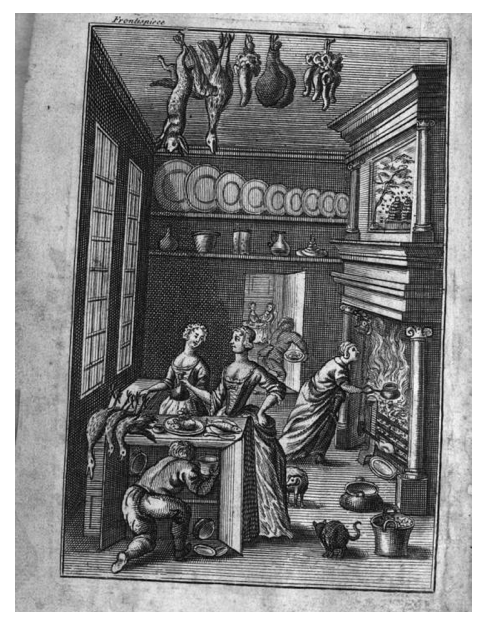
The Compleat Housewife, Eliza Smith, 1742


Pin It