>
Showing posts with label Drugs. Show all posts

Friday, April 20, 2012

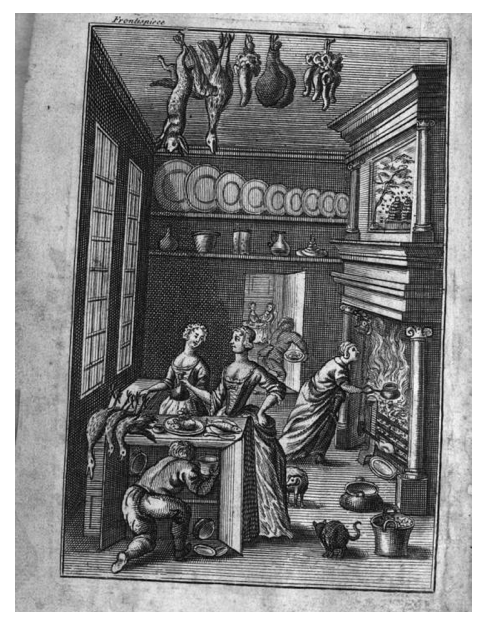
420 Roaches


Dude #1: Dude

Dude #2: Yah

Dude #1: You’ll never guess what I found

Dude #2: What

Dude #1: A recipe for roaches, man

Dude #2: That’s wild man

Dude #1: Yeah

Dude #2: Like, cockroaches?

Dude #1: Nah, roaches.

Dude #2: We’re set, man! Never go hungry again, man!

Dude #1: Dude

Dude #2: Yeah

Dude #1: Your hair’s on fire man

Dude #2: Again?

The Cooks and Confectioner’s Dictionary, John Nott, 1773

Friday, March 23, 2012

One Toke Over The Line

Quelle horreur!

While it has always been perfectly acceptable for non-food recipes to be included in traditional cookbooks — such as those for home remedies, many for home management pertaining to cleaning and preserving, personal care (including perfumes and cosmetics), and even for imbibing (alcohol production and tobacco products) — the line seems to been drawn at recipes for getting high.

Thus is was that a furor was created upon the publication of Alice B. Toklas’s cookbook in 1954, when it was discovered to contain this recipe for a dessert containing cannabis (which had been submitted by a friend). Toklas claimed she wasn’t aware it did. The upset seems to be not simply that such a naughty recipe was included in the book, but that it was expurgated from the American version.

Urban legend has it that Toklas got the last laugh (in absentia) by lending her name to the method, rather than the ingredient.

The Alice B. Toklas Cook Book, Alice B. Toklas, 1954

Also from this book: Sloe Gin

Saturday, February 18, 2012

Fried and Baked


The 1987 public service announcement from the Partnership For A Drug Free America, “This Is Your Brain On Drugs” has been ranked one of the top 100 ads of all time. It utilizes the slang commonly used to refer to hard drug use, being “fried.”


Though it lumps all drugs under one label (“drugs”), all drugs are not equal. Marijuana, for example, only leaves you “baked,” a far gentler cooking option which generally results in raising agents lifting a dough to make it high.

Nowadays we don’t have PSAs like this to warn people of the destructive effects narcotics have on your looks, your talents, your behavior and your career. The youth of America doesn’t need them. They have TMZ.

Cooking For Young Homemakers, Culinary Arts Institute, 1964

Also from this book: Roast Opossum, Fried BrainsCrown Roast of FrankfurtersRudolph the Red Nosed Pot Roast

Monday, January 30, 2012

Take A Deep Breath….


Chloroform has developed a bit of a bad reputation. Where once it was used as an anesthetic to replace ether (at a time when surgery was a bit like butchery), now we associate it with someone being mugged with a chloroform-soaked rag by an antique hoodlum — probably because actual hoodlums did in fact utilize the drug this way.


Those undergoing surgery were probably very thankful for it (it beat taking a big gulp of whiskey and biting down on a cloth), but unaware of the danger they were in if they inhaled a tad too much. A chloroform OD is not called “Sudden Sniffer’s Death” for nothing. It’s also officially listed by the FDA as “possibly carcinogenic to humans.”

It’s been banned in the US since 1976, but one can still find it in cough syrups sold in the UK. What is probably not recommended is this cure for a toothache from the same era in which Queen Victoria was using chloroform to birth her last two children. If you have a hole in your tooth the size of a pea, you should go to the dentist. Even if you are reading this in 1852. 

A Plain Cookery Book for the Working Classes, Charles Elmé Francatelli, 1852


Monday, October 31, 2011

Praise the Laud!


If  you should find yourself  suffering a spot of the “bloody flux” (dysentery) and you reach the point where your diarrhea is so bad you reasonably expect to die (as 700,000 do each year, according to the World Health Organization), then you ought to have these ingredients on hand to whip up some Laudanum, or as it’s also known, Tincture of Opium. Of course, you’d be long gone by the time it’s fermented for 20 days by the fire, but if you were sensible and knew dysentery was making the rounds, you’d have some already prepared.

But, I hear you scoff, they don’t sell opium at my local pharmacy counter.

Well, you’re not going to the right one. Because Tincture of Opium was marketed and distributed prior to the Federal Food, Drug and Cosmetic Act of 1938, it is grandfathered in as and “unapproved” but legal substance. It is still used to wean newborns off drugs received in the womb, and for exceptionally bad cases of the runs.

Laudanum was a very popular drug back in the 1800s, forming the basis of a great many patent medicines whose ingredients could remain a mystery. All that changed in 1906, when new rules made accurate labeling a requirement for sale. Dysentery was also fairly common, given the deplorable state of toilets and lack of hand washing. People relied on laudanum to treat almost anything, which if it failed to actually cure the ailment, certainly assuaged the symptoms (at least temporarily). Because it was a classified as a medicine it was not taxed as an alcoholic beverage, which meant that it was cheaper than a bottle of wine, and thus became the first working class drug.

Like any good drug, however, it was used and abused by everyone. Laudanum addicts could be found everywhere — Mary Todd Lincoln loved the stuff.

This recipe is for Sydenham’s Laudanum, named after the brilliant English physician Thomas Sydenham who compounded it in the 1660s. He was the chap who said “Of all the remedies it has pleased almighty God to give man to relieve his suffering, none is so universal and so efficacious as opium.”

Paracelsus, Badass Extraordinaire
It is still narcotized opium though, which will make you puke your guts out. What you want is de-narcotized, or deodorized opium, which has had the narcotine (a powerful emetic) removed.

As for the other ingredients: “sack” is sherry; and saffron, cream of tartar, cinnamon, cloves and mace can all be found in your supermarket’s spice section.

The word “Laudanum” comes from the Latin laudare — to praise. It was coined by Paracelsus, a Swiss-German alchemist who discovered that opium was best dissolved in alcohol rather than water. Back in the 16th century, it was important to be able to name things well, a task made easier when engaging in neologism meant building words with Latin laced with a generous dose of wit and propriety. His parents must have felt the same way, because his real name was Phillippus Aureolus Theophrastus Bombastus von Hohenheim.

Put that in your pipe and smoke it.

The Compleat Housewife, Eliza Smith, 1742


Monday, October 10, 2011

Fear and Loathing in Safeways


Our trip was different. It was a classic affirmation of everything right and true and decent in the national character. It was a gross, physical salute to the fantastic possibilities of life in this country — but only for those with true grit. And we were choc full of that.

We were also choc full of flour and apples and eggs and mustard and onions and rice and ketchup and yogurt. We were piled high with honey and spaghetti and raw meats — ground beef and a disassembled chicken sealed in an unholy envelope of polystyrene and plastic wrap. There were lemons and lettuce and beans of all kinds and cans of tuna and great big vats of milk. There was something called “Cremette” my attorney threw in there at the very beginning for good measure. There was margarine and sauerkraut and cottage cheese and chow mein.

I had pleaded with him not to rip open a 10lb sack of flour right in the aisle because he was under the impression they were selling cocaine in the supermarkets now, a thought that delighted him so much he couldn’t wait to strip off this clothes and roll about in it, but the cashier glared at us and we thought we could see the handle of a gun poking out of her waistband so we struggled to haul it into the cart. Those damn things have wheels. Every time we thought we had it in the trolley it rolled away, so we ended up lumbering the entire length of the aisle until we managed to pin the cart against a stack of cans of cooking oil. We threw in two bags of “Whole Wheat” too just in case it was the real thing — you never know.

I was nervous about the cashier’s gun and suggested we just make a dash for it through the electronic doors into the parking lot but my attorney reminded me that this would constitute stealing, and the only things worth stealing were cars and guns, so we approached her with caution. The fluorescent lights were beginning to mess with my brain and I started sweating profusely. We had no money — how were we going to pay for all these groceries? It seemed inconceivable that women all over the country did this on a weekly basis. No wonder they were all stuffing valium down their gullets by the truckload.

“No sudden movements,” I said, “and stop swatting at those flying lizards. She’ll begin to get suspicious and call the cops.”

By the time we made it to the register we’d lost our appetite. The munchies had worn off and we were left with enough food to feed a small child of three for eleven years. There was nothing for it but to walk away. Very slowly at first.

Then we ran. 

 Budget Saving Meals Cookbook, Ideals Publishing Corp, 1980

Also from this book: Purple Haze, Nutty As A Fruitcake

Saturday, October 1, 2011

Tangiers Hash


If one looks up the phrase “Tangiers Hash” in Google, over a million results come back at you, none of which are recipes for a rather benign dish of pork sausage. A good deal of them relate cautionary tales of what not to do in Morocco if you want to enjoy your holiday without being thrown in jail. The rest are odes to doing the exact opposite of what the others suggest, enabling you to enjoy your holiday even more.

Making a mess of things is the guiding feature of this dish, which is a classic culinary hash — meaning coarsely chopped. Everything in it has been sliced, diced, ground, crumbled and snipped. One supposes that the recipe writer thought it dead funny to make a play on the word “hash” by naughtily referring to the other kind of hash one finds in Tangiers — which today seems rather quaint.

Ultimately, it’s a trick that backfires when the diner, expecting to get his or her brain melted into a tetrahydrocannabinol stupor after a few mouthfuls, discovers that there are absolutely no psychoactive ingredients in it at all. Boooooring.

The hash, on the other hand, has been busy being utilized for dozens of meanings across several disciplines and notation systems. The hash key on a phone, for example (#) is used to denote the end of a variable-length string of numbers with a tone that mixes 941 and 1477 Hz. That’s probably the exact same frequency of a hashish buzz.

It can all get a bit confusing. Hash brownies should not be confused with hash browns, for instance, lest one eat the wrong thing for breakfast and spend the rest of the day giggling on the kitchen floor.

Kif kif, you say — so what. Kif (or kief) is the powder gained by rubbing THC crystals from unfertilized marijuana buds before it is compressed into blocks of hashish. Keef Richards, on the other hand, is actually made from a giant block of hashish which has been carved into human form and has developed a cracked patina over time.

Cracked patina sounds like it should be an ingredient in Tangiers Hash, but isn’t. Am I rambling on? Terribly hungry all of a sudden. Got anything to eat?

# # #

Ground Meat Cook Book, Better Homes and Gardens, 1969

Friday, July 29, 2011

They Serve Coke At Parties, Don’t They?


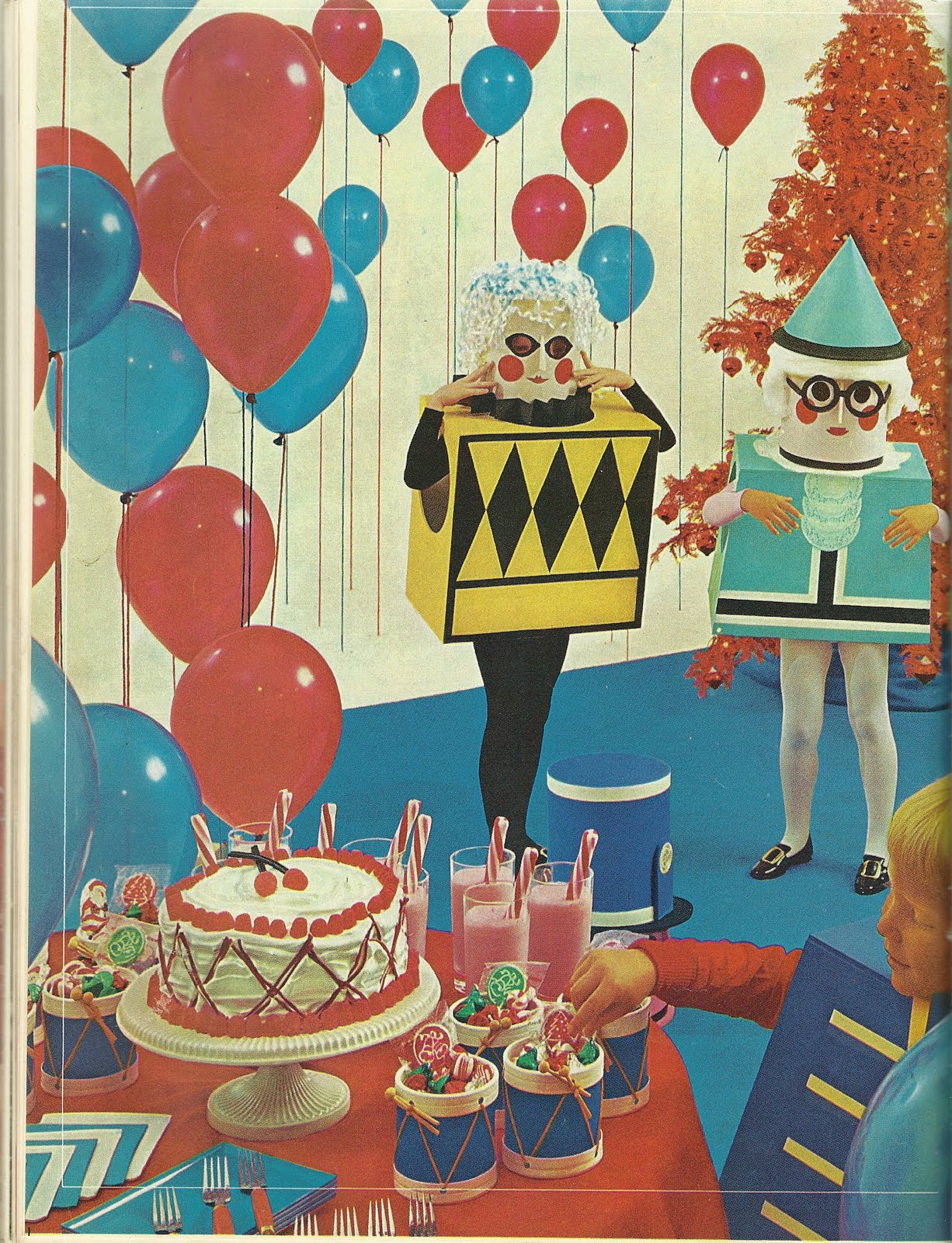
What is it with kid’s parties? Why must adults insist on creating terrifying tableaux of life inside the ruined mind of a PCP addict? In what possible realm of sanity does this “good time” exist? Where on earth does one find a red imitation Christmas Tree and what is it doing here? Can someone please stop that innocent child from licking the LSD lollipop? How did they get all those balloons to float at various heights like that? How many years of intensive therapy will that girl in the blue box costume require to heal her of her demons? Who the hell is responsible for Chuck E. Cheese and how did associating a giant rat with both children and food become so successful? Shouldn’t we teach children to stay away from giant rats and men dressed in rat costumes seeking to “entertain” them? How much sugar is enough sugar? Is that cake made out of shaving foam? Isn’t Willy Wonka a suspicious sounding name? Given that a “willy” is another name for “penis”? How was Crisco involved in the production of these food items? Can I go home now? Please?

Crisco Presents Favorite Family Foods, The Procter & Gamble Company, 1973

Also from this book: Sausage Breakfast Bake With Crisco, An Eye For An Eye
Pin It