>

Sunday, October 9, 2011

Teddy Bear’s Picnic


If you go out in the woods today

You're sure of a big surprise.

If you go out in the woods today

You'd better go in disguise.


For every bear that ever there was

Will gather there for certain, because

Today's the day the teddy bears have their picnic.

BEAR ONE: Easy does it…easy does it…
BEAR TWO: Shhhh! They’ll hear us!
BEAR ONE:  (whispering) They are too stupid to hear us. Also, they have a primitive sense of smell.
BEAR TWO:  I’ll go for the steaks on the left, you take the ones on the right.
BEAR ONE:  Do you want any salad?
BEAR TWO:  Nah.
BEAR ONE:  Golly, each of these things must weigh 4 lbs! It always amazes me how humans can eat so much yet stay so thin.
BEAR TWO:  It’s not like they have to hibernate either!
BEAR ONE:  I know! madness!
BEAR TWO:  Hey — did you notice they put out butter knives?
BEAR ONE:  Good luck, people! Idiots.
BEAR TWO:  They’re in for a nasty surprise when they sit down to dinner!
BEAR ONE:  People never learn.
BEAR TWO:  I can’t wait to tell the guys back at the den about this lot.
BEAR ONE:  Last night when I was scoping this site out I found their recipe book, did I tell you that?
BEAR TWO:  No, go on. This should be a laugh.
BEAR ONE:  No shit. It was open to a page on “Campfire Cookery.” It read “Since fire was first discovered, man has cooked his food over an open fire.”
BEAR TWO:  Are you serious?
BEAR ONE:  Swear to God.
BEAR TWO:  Who writes that nonsense? It doesn’t even make sense.
BEAR ONE:  I know! As if man could have cooked over an open fire before it was discovered!
BEAR TWO:  All fire is “open.” It makes you wonder, doesn’t it, how humans could have come this far.
BEAR ONE:  It blows your mind. Man, that was good steak. I’m full.
BEAR TWO:  You have that glazed look about you.
BEAR ONE:  I could still go for some berries though. I like a bit of something sweet after a meal. Besides, it’s October — the Missus says I have to put on more weight.
BEAR TWO:  Is she knocked up yet?
BEAR ONE:  I bloody well hope so — it’s been nothing but mating all autumn. I’m exhausted!
BEAR TWO:  They get insatiable.
BEAR ONE:  And then they don’t let you anywhere near them in the Spring! It’s so unfair.
BEAR ONE:  Tell me about it.

           Encyclopedia of Cooking 3, Bro to Cau, Better Homes and Gardens, 1970

           Also from this book: Seafoam Cantaloupe Pie, Cooking By EncyclopediaIt’s A Green, Green, Green, Green World


Saturday, October 8, 2011

Cheefe


Next time you enjoy a bit of cheese, consider whence it came, and what it took to get here. That innocuous rectangle of plastic-wrapped, odorless, evenly textured industrially-produced cheddar is one of those modern foods that is easy to eat because we do not see it being made.

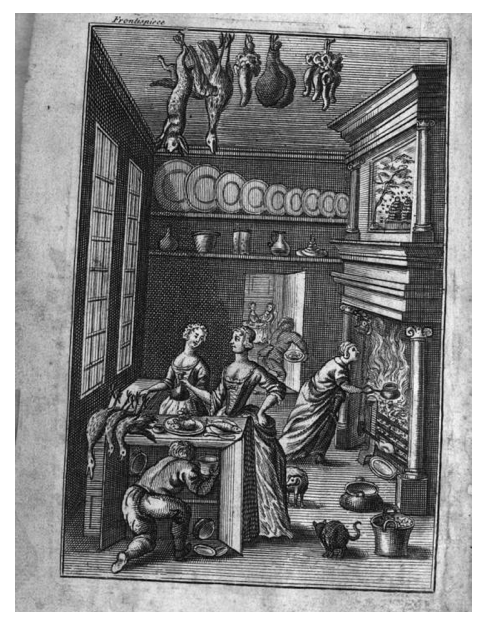
Today, it involves lots of metal in a factory and workers in masks and latex gloves, but in 1742, it was made at home by ladies with strong stomachs. Actually, they made it with newborn calf’s stomachs, as you can see (they call it a “bag”).


Stinging nettles are used to wrap the cheese because they contain a rennet-like coagulant which helps the cheese to form. Rennet is the enzyme that allows milk to become cheese, as opposed to simply rot. Today, cheese is made using the by-products of the veal industry for cow's milk cheese, though lamb's stomachs are used for making sheep's milk cheeses, goat's stomachs for goat's cheeses, and so on. 

Vegetarians and those keeping Kosher need not despair however; a number of vegetable-based rennets are available. They are made from mold. On the other hand, some of the bacteria, fungi and yeast that comprise this mold have typically been modified with cow genes. Up to 90% of the cheese on your supermarket shelf is made with Chymax, a synthetic rennet made by the pharmaceutical company Pfizer. 


It's important that the calf be slaughtered before it has been weaned so that its stomach has not been introduced to elements that change the type of rennet it produces. 

Cottage cheese is so-called because it was a relatively quick variety of cheese to make at home, requiring far less stroking and curing than the solid cheeses. Cheese, like people, tend to sweat when not refrigerated. 

The Compleat Housewife, Eliza Smith, 1742


Friday, October 7, 2011

It Was All Yellow


Your skin, oh yeah your skin and bones
Turn into something beautiful
D’you know? For you I bleed myself dry
For you I bleed myself dry

— Coldplay, “Yellow”

This photograph doesn’t tell us much about the food it’s supposed to illustrate — the cheese-bacon stuffed tomatoes. It would be easy to miss them altogether amid the glaring yellow and white color scheme which seems to have been assembled by a stylist hell-bent on assuring that everything in this picture (apart from the sad-looking tomatoes) is brand spanking new.

That candle, for instance, has been so freshly lit the wick hasn’t even blackened down to the wax yet. There is nary a fingerprint in sight, and those linens still bear the folds from the packet they were wrapped in.

The brilliant lights illuminating the scene beyond the power afforded even by the sun can be seen reflected in the cruet set’s brushed steel and mock the candle’s flame pitiful weakness.

For the sake of following some rule about composition, the designers responsible for this image have inadvertently told more of a story about themselves and heightened, rather than lessened a sense of loneliness and despair when a meal is prepared for two. There is no family to muss things up; neither party is likely to be encouraged or satisfied with this meager offering, no matter how accessorized it is. The only green comes not from a salad or vegetable, but from a poisonous-looking plant.

Even the fork lacks tines, a trident lost at sea.

Quick and Simple Cooking for Two, Ideals Publishing Corp, 1976

Also from this book: Depth Of FieldA Feast For The Eyes

Thursday, October 6, 2011

Close Encounters of the Meat Loaf Kind


In one of the best acted scenes in all of American cinema, Richard Dreyfuss, playing Roy Neary in Close Encounters of the Third Kind, fashions the Devil’s Tower out of mashed potato to the dismay of his family. This scene requires an ungodly amount of discipline; Roy Neary is compelled to recreate images of the Devil’s Tower by forces he cannot explain and becomes aware, after seeing his wife and children’s bewilderment, that his actions are scaring them. Dreyfuss has to not only convey his illusion that the mashed potato is the Devil’s Tower to the audience with conviction, but he has to actually mold it into shape without getting an acute attack of the giggles.

Emotionally it rides the razor’s edge between humor and despair, especially on the part of the children, who at first are puzzled by their father’s odd behavior — which would be silly under any other context — but which now signals his mental breakdown. They cry real tears. Eventually, Roy’s wife leaves him, taking their children with her. Although Roy loves his family (which he assures them in this scene), he decides to join the aliens who eventually land at the Devil’s Tower, and leave the planet, thus making his mashed potato scene even more poignant.

The part was turned down by Steve McQueen because he could not cry on cue. It was also rejected by Dustin Hoffman, Al Pacino, Gene Hackman and Jack Nicholson.

For a long while after 1977, mashed potato suffered the indignity of being molded into the Devil’s Tower on countless dinner plates while people sang out the film’s distinctive theme tune. By 1979, when the New Junior Cook Book was published, mashed potato was reduced to a kind of edible Play-Doh being smeared on meat loaf. The mash in the film was clearly made from instant potato (tell-tale signs: its gummy texture and brilliant white color), as is this.

If Roy’s wife had used real potatoes, perhaps he would never have climbed aboard the mothership. Just sayin’.

New Junior Cook Book, Better Homes and Gardens, 1979

Also from this book: Scrumptious Sweet Potatoes

Wednesday, October 5, 2011

Apple Genius


The apple was born in Kazakhstan Silicon Valley millions of years ago in 1976. Chances are that you have never eaten used an apple that has not been created by man, because all edible apples are clones of an original tree. Most other apples computers are wildly unpredictable and leave a bitter taste in your mouth. 

For example, the original Macintosh Apple was discovered built in 1811 1976 by Mr. MacIntosh Steve Jobs and Steve Wozniak on his farm in Ontario, Canada in a garage in Cupertino, California. All Macintosh apples are descended from this tree idea, cultivated from grafts prototypes. The original tree died in 1906 2011.

Macintosh Apples, Apple Macs, and everything you can do with them, are insanely great.

Mrs. Beeton’s Everyday Cookery, Ward, Lock and Co., Ltd.


Tuesday, October 4, 2011

Frosted Sandwich Loaf


Imagine the disappointment this lady’s guests will feel when she slices into what looks like a nice, deep carrot cake. After all, she does have her best china out and what looks like a set of gold cutlery. She’s gone to such trouble to decorate the platter with parsley grass, radish flowers and daisies.

But no! underneath that cream cheese frosting lies a giant sandwich!

Her guests better like egg salad, tuna salad and chicken salad, because each sandwich contains all three! Genius!

Just one question: how on earth does one pick a slice up? Isn’t the point of a sandwich the fact you don’t need utensils?

Helpfully, the recipe states that you should prepare each filling in “individual bowls” as opposed to all in the same bowl. In fact, no recipe is needed: the picture gives you all the instruction you need.

Soup, Salad and Sandwich Cookbook, Ideals Publishing Corp., 1981

Monday, October 3, 2011

For Whom The Corndog Rises


It was a good day for a cookout. Harry poured himself a drink. Nick was coming over later, and when he did, they would have more drinks. For now, Harry occupied himself with the corndogs. Mary was passed out on the sofa. He wished Mary hadn’t drunk so much so that she could make the dinner and he could go back to writing. He donned an apron and sifted flour, sugar, baking powder and salt into a bowl. First, he fished the bullets out of the baking powder and sat them on the counter while he measured out 1 ½ teaspoons of it, then he put the bullets back in for safekeeping. He didn’t know why Mary hid the bullets in the baking powder instead of the flour like everyone else.

Then he stirred in the corn meal. He cut in the shortening until it resembled fine crumbs between his fingers, like rough sand. He poured himself another drink, then decided he’d rather have a beer. He combined egg and milk in a cup and added it to the cornmeal mixture. Things were coming together now, and he felt the afternoon would be a success.

He reached for the frankfurters. They reminded him of the war, when frankfurters were all they could find to eat on the streets of Frankfurt. They were everywhere, being brandished by soldiers with terrible wounds. The memory made him sweat. He drank from his beer. That was better. He pushed each frankfurter onto a stick and dipped it briefly into the batter, coating each one thoroughly. Mary stirred, but did not wake. She was going to feel it tomorrow. It was no laughing matter.

By now the oil was bubbling in the fryer. It make a hissing sound like water in a shallow stream. The one he fished as a boy used to sound like that too, in March when it was swelled by the melting snow and ran fast. He loved to catch fish then — all he needed to do was reach in and grab them with his bare hands. He broke their necks and set them in a basket on the bank.

He put the battered frankfurters in the boiling oil and watched them fizz. He didn’t know how long it would take, maybe 4 or 5 minutes. Meanwhile, he finished his drink. Cooking was thirsty work. Nick would be here soon, and he wanted everything to be ready. Nick was driving all the way from Spain to Idaho and would be thirsty too.

He opened a tin of beans and poured them into bowls. He wondered how to serve the corndogs — that’s what they were, really — and considered waking Mary to ask what to do. But Mary was still out cold, her mouth hanging open. It looked like she'd been shot, but she hadn't. A small puddle of drool had formed on the cushion under her head. Harry was angered by this, her blatant disregard for household furnishings, but many was the time he had woken from a blackout drunk in far worse circumstances, so he left her be. Boy, was she going to feel it.

The corndogs were ready to be taken out of the oil. There was no other choice but to serve them stuck in a cabbage. It seemed a waste of a cabbage, and Nick had not yet arrived, so he hollowed out an opening in the top of it with his pocket knife and inserted a bowl of catsup. He stood back and admired his handiwork. It was a better job than when he’d had to cut his own leg off in the war. Mary would be proud. Mary was a looker back then, and slept with all the soldiers. Harry had wanted to chase them off, but couldn’t. They usually had both legs. Instead he sat in the dark, drinking and brooding. She always came back in the end, legless drunk. Harry took a sordid pleasure in the irony. 

He could hear an engine coming up the drive. It was Nick. He was on his motorcycle. He was holding a case of beer in one hand and three bottles of brandy in the other. It was a wonder he could drive.
            “I say,” he called out over the throttle, “I’m starving! Is Mary about?”
            “Passed out,” Harry replied, taking the beer. “In the living room. Best not disturb her.”
            “Gosh, she’ll feel it in the morning,” Nick said. “We’ll all feel it in the morning I expect. Good Lord — is that your creation?” Nick was pointing at the cabbage impaled with corndogs which sat on the patio table.
            “It’s the best I could do, I’m afraid,” Harry said, opening two beers. “I’d like to think Mary would be proud of it.”
            “Well,” Nick said, taking a long drink, “I’m not sure about that, old chap. But wouldn’t it be pretty to think so?”

Barbecue Book, Better Homes and Gardens, 1956

Also form this book: Balls

Saturday, October 1, 2011

Tangiers Hash


If one looks up the phrase “Tangiers Hash” in Google, over a million results come back at you, none of which are recipes for a rather benign dish of pork sausage. A good deal of them relate cautionary tales of what not to do in Morocco if you want to enjoy your holiday without being thrown in jail. The rest are odes to doing the exact opposite of what the others suggest, enabling you to enjoy your holiday even more.

Making a mess of things is the guiding feature of this dish, which is a classic culinary hash — meaning coarsely chopped. Everything in it has been sliced, diced, ground, crumbled and snipped. One supposes that the recipe writer thought it dead funny to make a play on the word “hash” by naughtily referring to the other kind of hash one finds in Tangiers — which today seems rather quaint.

Ultimately, it’s a trick that backfires when the diner, expecting to get his or her brain melted into a tetrahydrocannabinol stupor after a few mouthfuls, discovers that there are absolutely no psychoactive ingredients in it at all. Boooooring.

The hash, on the other hand, has been busy being utilized for dozens of meanings across several disciplines and notation systems. The hash key on a phone, for example (#) is used to denote the end of a variable-length string of numbers with a tone that mixes 941 and 1477 Hz. That’s probably the exact same frequency of a hashish buzz.

It can all get a bit confusing. Hash brownies should not be confused with hash browns, for instance, lest one eat the wrong thing for breakfast and spend the rest of the day giggling on the kitchen floor.

Kif kif, you say — so what. Kif (or kief) is the powder gained by rubbing THC crystals from unfertilized marijuana buds before it is compressed into blocks of hashish. Keef Richards, on the other hand, is actually made from a giant block of hashish which has been carved into human form and has developed a cracked patina over time.

Cracked patina sounds like it should be an ingredient in Tangiers Hash, but isn’t. Am I rambling on? Terribly hungry all of a sudden. Got anything to eat?

# # #

Ground Meat Cook Book, Better Homes and Gardens, 1969

Friday, September 30, 2011

Anything To Declare?


— Excuse me Sir, you’re not allowed to bring those into the country.

— Why not?

— They’re contraband — not allowed. Against the law. Illegal.

— But they’re only cigars! Surely that’s OK.

— No they’re not — they are asparagus.

— Not at all; they’re panatelas. Look.

— Sir, you are brandishing a box of asparagus spears.

— Spears? What? I have no spears. I have cigars. You know, tobacco.

— It is not permitted to bring raw vegetables into the United States.

— What does that have to do with my cigars?

— Certain fruits and vegetables carry the risk of contamination via pests and bacteria.

— But the heat from the smoke would surely kill any pests in my cigars —

— The Mediterranean fruit fly outbreak of 1980 can be traced to just three male fruit flies.

— That’s awfully specific. I don’t know what that has to do with my cigars though, to be perfectly honest.

— Sir, they’re not cigars. You have been duped. You are the victim of a hoax.

— What!

— You have been marked as a rube and have fallen for the oldest trick in the book.

— Why, I —

— You have been sold a box of asparagus spears in lieu of your panatelas.

— How is that even possible?

— I see it all the time. You’re not alone. It’s a racket. But you have to hand them over, I’m afraid, because under the current customs guidelines, they are restricted. You can bring in as many cigars as you fancy, just not asparagus.

— But what are you going to do with them?

— I am duty bound to confiscate them, Sir.

— Well, I’ll be darned . . .

— I’m sorry, Sir; them’s the rules. Move along now; you’re holding up the line.

* * *

— Pssst — Jason!

— Yo, wassup?

— Get a load of these panatelas I just confiscated.

— Nice, brother! What d’you want for them?

— $50 should do it.

— I’ll give you $20.

— $30.

— Sold. That old asparagus line works every damn time.


Vegetables, The Knapp Press, 1983

Thursday, September 29, 2011

SPAM: A Madd Couple Well Matcht


 In 1652, the dramatist Richard Brome introduced to the written language the charming phrase “noonings and intermealiary lunchings” in his play, “A Madd Couple Well Matcht.” The word for a meal eaten around noon, luncheon, dates from around 1580 (at least in print), and usually referred to a thick slice of bread eaten with cheese.

It took 357 years for the Hormel Company to change all that by inventing a new “luncheon meat,” SPAM. In 1937 when it was launched, neologisms were all the rage in advertising, and a chap named Kenneth Daigneau — a brother of a Hormel executive — came up with it, pairing spiced with ham, one of the more successful cases of a word whose origins exemplify a “couple well matched.”

So popular was this tinned meat that it soon entered the literary sphere. In 1939, Steinbeck referred to it in The Grapes of Wrath: “The tractor driver stopped‥.and opened his lunch: sandwiches wrapped in waxed paper, white bread, pickle, cheese, Spam.”

But in just twenty short years, Spam’s reputation took on a darker flavor; by 1959 the term “spammy” had come to mean commonplace, mediocre and unexciting as a direct allusion to SPAM’s distinctive blandness.

By the time personal computing and email required a term for opportunistic crud that flooded your mailbox, 5 billion tins of SPAM had been sold. It proved the perfect word to poach for this new purpose, which the Los Angeles Times did in 1993 with “This rumor may have a high Spam content.” Thus it was that a proper noun — SPAM — transformed itself into an adjective and a verb; hence to spam; to be a spammer. By utilizing the word in a new, lower-case context, proprietary laws governing the brand name’s use can be avoided.

None of this seems to have hurt SPAM itself, however. Its popularity remains in place, partly due to a re-engineering of ingredients to keep pace with the public’s perceived need for low-fat, low-salt versions, and a healthy dose of nostalgia. Indeed, the Hormel Company appears to have decided to embrace the new meaning of their word by promoting the satire “Sir Spamalot” on their website (where the word “SPAMALOT” is once again brought under the copyright umbrella as an officially trademarked name.

This seems fitting; good old Kenneth Daigneau was himself a well-known Broadway actor. Ultimately, it’s all a play on words — not just a play with words. 

 Most-For-The-Money Main Dishes, Campbell Soup Company, 1975

Pin It